
Our Team

Warren J. Boord
President, CEO & Founder-
Mr. Boord founded Boord Engineering Sciences and Technology (BEST), LLC in 2023. He holds an MS in Mechanical Engineering from The Johns Hopkins University, and a BS Degree in Aerospace Engineering from West Virginia University. His career spans 45 years in the defense scientific and technical acquisition (S&TA), and the scientific and technical intelligence (S&TI) communities. He has 24 years of commercial private industry and laboratory employment, 15 years as a Department of Defense (DoD) federal civilian employee and six years as a USAF Officer.
His professional achievements include developing proficient technical, managerial, program management, business development, supervisory, executive management and leadership skills. He is an accomplished author who is the lead co-author of “Air and Missile Defense Systems Engineering”, CRC Publishing, March 2016 and is the author and co-author on multiple missile G&C and air defense topics specifically in the AIAA Journal of Dynamics, Guidance and Control, AIAA Missile Sciences, the 4th World Congress on Nonlinear Analysis, and AIAA SciTech conferences. He earned a DAWIA/DAU Program Management Level III certification in 2017, and was elected a member of the Academy of Distinguished Alumni, WVU College of Aerospace Engineering in 2018. Mr. Boord is a Senior Member of the American Institute of Aeronautics and Astronautics (AIAA), is an active member of the AIAA Weapon Systems Effectiveness (WSE) Committee and was the Weapons Systems Modeling and Simulation Session Chair at the 2025 & 2026 AIAA Defense Forums.
-
Threat & target engineering
Scientific research & analysis
Systems solutions
Guidance & control
Advanced weapons technology
Operational test & evaluation
Corporate

Jorjan Boord
Administrative Executive-
Jorjan Boord earned her Bachelor of Science in Nursing with High Honors from the University of Maryland in 1986 and obtained her RN First Assist Certification from the Nevada Institute of First Assist in 2011. She maintains CNOR certification and is a member of the Phi Kappa Phi Honor Society. She also utilizes the TeamSTEPPS program to support high-functioning clinical teams.
With 40 years of nursing experience, primarily in the operating room, Jorjan has held extensive clinical and leadership roles in neurosurgery, orthopedic spine, perioperative services, and breast oncology. She spent 11 years at Johns Hopkins Hospital, advancing to Nurse Manager for the Neurosurgery and Orthopedic Operating Room and a Neuroscience Inpatient Unit.
Since joining Anne Arundel Medical Center (AAMC) in 1995, she has served in multiple leadership positions, including Nurse Manager Perioperative Services and Team Leader Neurosurgery, where she developed the cranial surgery program. She currently serves as Team Leader RN for the Breast and Plastic Operating Room at AAMC–Luminis Health in Annapolis, Maryland. Over 15 years in this role, she has built and led a highly effective multidisciplinary Breast Team, overseeing quality metrics such as First Case On-Time Starts, Turnaround Time, HER2 Ischemia Compliance (95–100%), and maintaining a 0% specimen error rate through standardized interdisciplinary processes.
Jorjan’s business experience includes two years as owner, operator of a 175-seat historic upscale restaurant where she managed all facets of operations and accounting.
Jorjan manages BEST’s office accounting and serves as the primary contact for administrative and contract matters.
-
Customer interface
Negotiations
Accounting
Contracts
Office Management
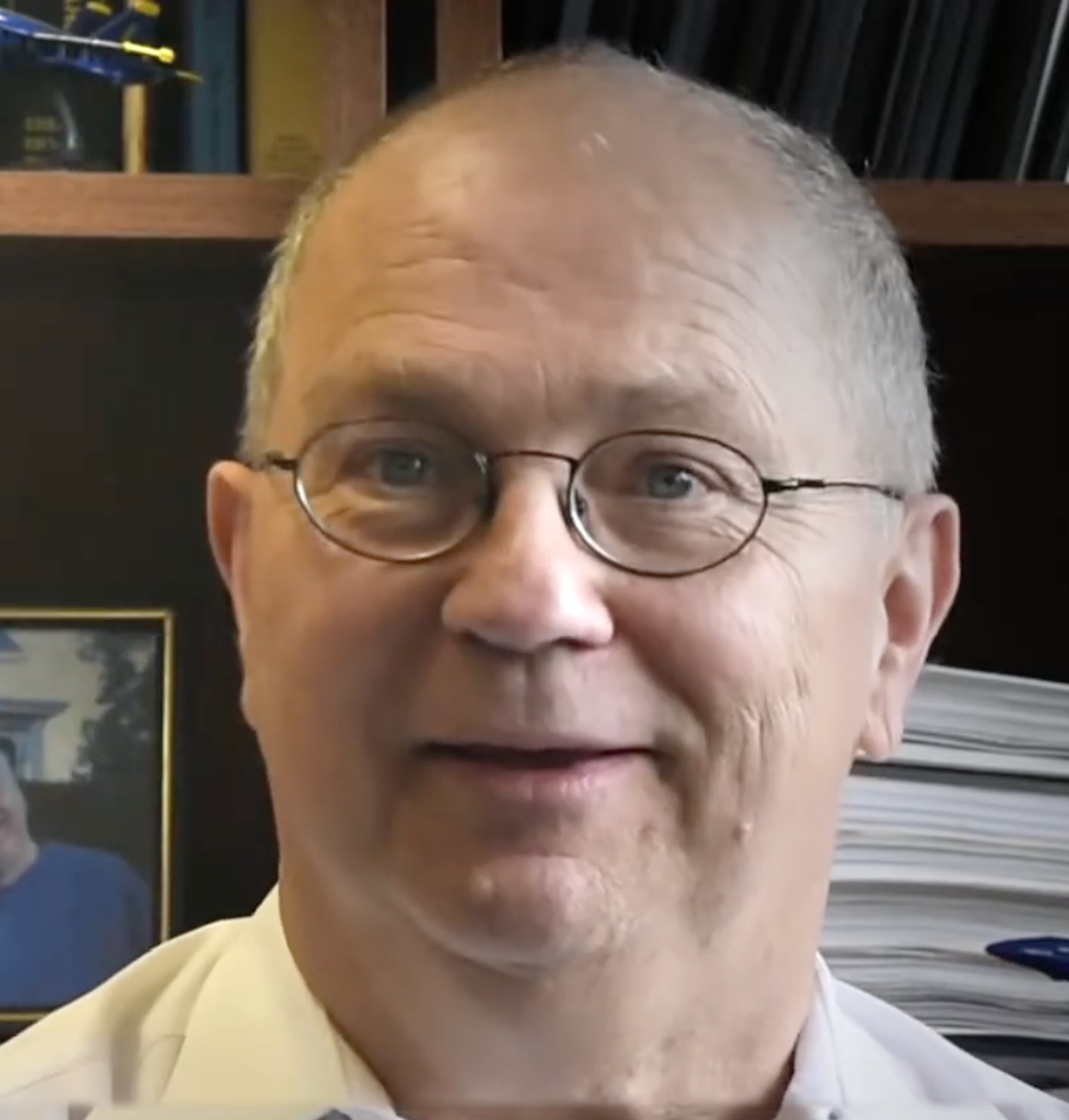
Dr. Phillip Pace
Chief Scientist- Electromagnetic Systems-
Phillip Pace the Chieft Scientist for Electromagnetic Systems for BEST, LLC. He is a Distinguished Professor Emeritus in Electrical and Computer Engineering at the U.S. Naval Postgraduate School. He earned his B.S. and M.S. from Ohio University (1983, 1986) and his Ph.D. from the University of Cincinnati (1990), all in electrical and computer engineering. Prior to NPS, he worked at General Dynamics (Radar Systems) and Hughes Aircraft Company for over seven years. He has also served as an adjunct professor at SMU, a senior scientist at L3Harris Technologies, and a research staff member (adjunct) at the Institute for Defense Analyses.
Dr. Pace founded the NPS Center for Joint Services Electronic Warfare (1993) and led the Navy N2/N6 Threat Missile Simulator Validation Working Group (1996–2017). His research spans RF weapon systems, electronic warfare, radar waveform design, and digital transceivers. He is the author of four textbooks published by Artech House, holds 11 patents, and has over 80 conference papers and 36 journal publications. He received the U.S. Navy Superior Civilian Service Award (1989–2019), served as an editor for IEEE Transactions on Aerospace and Electronic Systems (2013–2020), and was awarded the 2024 AOC Academic Excellence and Education Award. He is a Life Member of AOC and a Life Fellow of IEEE.
-
Threat & target payload engineering
Systems solutions
Scientific research & analysis
Threat missile seeker engineering
Seeker LPI, adv. waveform design including AI/ML-based methods
Missile-target configurations
C4ISR transceivers
Swarm design & analysis/ swarm training & disruption
Threat missile targeting air-to-surface, air-to-air advance including surface synthetic imaging
Optimal use of captive-carry at-sea anechoic tests and configurations fusion
Electromagnetic attack, protection, counter-digital RF memories.

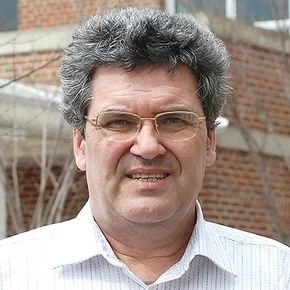
Dr. Wade Huebsch
Chief Scientist- Aerospace Systems-
Dr. Wade Huebsch is the Chief Scientist for Aerospace Systems for BEST, LLC. He is a Professor in the Mechanical, Materials & Aerospace Engineering Department at West Virginia University. He received his B.S. in Aerospace Engineering from San Jose State University, M.S. in Mechanical Engineering from Iowa State and Ph.D. in Aerospace Engineering also from Iowa State University.
He has subject-matter expertise in the areas of fluid mechanics, atmospheric flight, boundary layer flow control, unsteady aerodynamics, unstable flight and threat engineering. He has conducted research in the relevant areas of aircraft icing, contrail development, UAV design, hybrid transforming projectiles, wing morphing, transient wing deployment, aerodynamic flow control, damaged-state aerodynamics, and characterization of unstable, tumbling flight vehicles. His investigative approaches have included wind tunnel testing, free-flight testing, CFD and CFD-6DOF.
He has published over 30 archival journal papers (worked in a 4-year span where publishing research results was not allowed) and over 70 refereed conference proceedings in these areas and continues an active externally-funded research program. His primary sources of funding for research have been with Army, ARL, Air Force, NASA, Navy, ONR and DHS, as well as industrial partners. He has been PI on multiple large DoD research efforts and holds a SECRET security clearance. Over the last 15 years, Dr. Huebsch has been PI/Co-PI on approximately $15 M of externally funded research and has managed large multi-disciplinary teams. He is also author and co-author of multiple fluid mechanics textbooks (2 titles, 7 editions) and book chapters (2 chapters), including being a co-author on the #1 fluid mechanics textbook in the US. This book was translated and published into 7 different languages. In addition to the research endeavors, Dr. Huebsch teaches a variety of fluid mechanics and aerodynamics courses in the MMAE Department. He has been awarded multiple internal and external teaching awards and is the faculty advisor for several student organizations at WVU.
-
Threat & target engineering
Systems solutions
Scientific research & analysis
Fluid mechanics
Atmospheric flight
Boundary layer flow control
Unsteady aerodynamics
Unstable flight
Dr. Mario Perhinschi
Chief Scientist- Control Systems and Modeling & Simulation of Aerospace Systems-
Dr. Mario Perhinschi is the Chief Scientist forControl Systems and Modeling & Simulation of Aerospace Systems for BEST, LLC. He is a Professor in the Mechanical, Materials and Aerospace Engineering (MMAE) Department at West Virginia University (WVU). He received his Aerospace Engineering and Aerospace Diploma Engineering degrees (B.S. and M.S. equivalent) from the Polytechnic Institute of Bucharest, Romania, in 1984, an M.S. degree in Aerospace Engineering from Georgia Institute of Technology in 1994 and a Ph.D. degree in Aerospace Engineering from the “Politehnica” University of Bucharest, Romania, in 1999.
He has subject-matter expertise in the areas of flight dynamics and controls, system modeling and simulation, artificial intelligence techniques, and mechatronics. He has conducted research in the relevant areas of simulation environment development for manned and unmanned aircraft, flight simulator design, path planning and trajectory tracking for autonomous flight, adaptive control, fault tolerant control, complex system health monitoring and control, artificial intelligence techniques for advanced engineering problems, and advanced instructional methodologies for aerospace engineering education.
He has published in these areas over 70 peer-reviewed archival journal papers, over 100 peer-reviewed conference papers, 6 books and book chapters, a large number of other publications and presentations, as well as substantial archival technical reports to research employers and sponsors. He continues an active externally-funded research program, over the years taking on PI and CO-PI roles on significant projects totaling multi-million funding and large multi-disciplinary teams. His primary sources of funding for research have been with NASA, U.S. Army, U.S. Navy, DARPA, U.S. Department of Energy, as well as with industrial partners.
In the academic field at WVU, he designed and taught and continues to teach a variety of undergraduate and graduate courses including flight simulation, mechatronics, automatic control, aircraft health monitoring, and artificial intelligence techniques. He has conducted aerospace engineering curriculum development as chair of the MMAE departmental committee for over a decade and was awarded multiple teaching awards.
-
Threat & target engineering
Scientific research & analysis
Systems solutions
Aerospace systems modeling & simulation architectures
Flight control systems:
research
design
analysis
AI/ML solutions in:
modeling & simulation
control systems
Fault tolerant control
Prototyping and flight testing of aerospace systems
Chief Scientists

Dr. Christopher Griffin
Senior Principal Engineer - Aerospace Systems-
Dr. Griffin is the Senior Principal Engineer for Aerospace Systems for BEST, LLC. He earned his Ph.D. in Aerospace Engineering from West Virginia University, where his doctoral research combined computational and experimental approaches to study leading-edge vortex dynamics and active flow control through dynamic roughness. His work demonstrated, both numerically and experimentally, the ability to alter vortex development in rapidly pitching airfoils, research that required synchronized CFD modeling, wind tunnel testing, and advanced particle image velocimetry (PIV). In addition to his research leadership, Dr. Griffin serves as a Teaching Associate Professor in the Mechanical, Materials, and Aerospace Engineering Department at West Virginia University, where he teaches graduate and undergraduate courses in Computational Fluid Dynamics, Experimental Aerodynamics, Compressible and Incompressible Flow, and Fluid Mechanics.
Dr. Christopher Griffin is a computational and experimental aerodynamicist with more than 15 years of experience leading federally funded research in fluid dynamics, unsteady aerodynamics, and advanced aerospace systems. He provides high-level technical leadership and modeling expertise to clients requiring rigorous analysis, simulation, and validation of complex fluid and flight systems.
Dr. Griffin’s core expertise lies in computational fluid dynamics (CFD), with extensive experience developing and executing high-fidelity simulations utilizing high-performance computing (HPC) clusters, coupled with advanced post-processing and validation methodologies. His work spans steady and unsteady aerodynamics, vortex-dominated flows, unstable and off-nominal flight regimes, heat transfer prediction, and CFD-coupled six-degree-of-freedom (6DOF) simulations. He specializes in integrating computational modeling with experimental validation, ensuring that simulation results are physically grounded.
Throughout his career, Dr. Griffin has served as Principal Investigator (PI) and Co-Investigator (Co-I) on multi-million-dollar programs sponsored by the National Science Foundation, U.S. Navy, U.S. Army, and other federal partners. His projects have included the modeling and simulation of unstable free-flight bodies, development of CFD-driven thermal performance predictions for naval diver systems, aerodynamic characterization of autonomous unmanned aerial systems, and advanced simulation of complex separating aerial vehicles. He has led efforts involving coupled CFD–6DOF frameworks, aerodynamic stability analysis, and performance optimization for next-generation aerospace platforms.
-
Threat & target engineering
Systems solutions
Computational fluid dynamics (CFD)
research
design
analysis
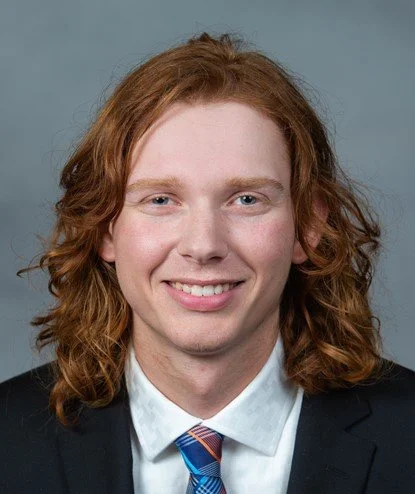
Dr. Nathaniel Michek
Principal Engineer - AI/ML, Modeling & Simulation of Aerospace Systems-
Dr. Nathaniel Michek is Principal Engineer for AI/ML and Modeling & Simulation of Aerospace Systems for BEST, LLC. He received his Ph.D. in Aerospace Engineering from West Virginia University in 2025 and his B.S. in Engineering Physics from the University of Wisconsin-Platteville in 2020. His Ph.D. work focused on developing a Physics-Informed Neural Network based Aerodynamic Modeling Framework (PINN-AMF) with a specific emphasis on extreme flight regimes.
He has published works on these topics in the AIAA Journal and has presented his work at multiple conferences, including AIAA SciTech and the IEEE Aerospace Conference. Since completing his doctorate, he has been working as a Research Scientist at West Virginia University, continuing to improve PINN techniques while expanding his research into various additional data-driven and machine learning techniques in fields with complex non-linear effects, including upper atmosphere and solar wind modeling and prediction. He has technical experience in developing neural network models across multiple frameworks (TensorFlow & PyTorch) and network architecture types (MLP, CNN, RNN), as well as uncertainty quantification techniques in neural network systems. Additionally, he has technical experience in scaled flight test systems, primarily focused on data collection and processing of scaled flight tests, with knowledge in optical and infrared motion capture systems.
-
Threat & target engineering
Scientific research & analysis
Systems solutions
Aerospace systems modeling & simulation
Physics-Informed Neural Network based Aerodynamic Modeling Framework (PINN-AMF) with a specific emphasis on extreme flight regimes
Data-driven and machine learning techniques in fields with complex non-linear effects, including upper atmosphere and solar wind modeling and prediction.
Developing neural network models across multiple frameworks (TensorFlow & PyTorch)
Developing neural network architecture types (MLP, CNN, RNN),
Uncertainty quantification techniques in neural network systems
Scaled flight test systems, focused on data collection and processing utilizing optical and infrared motion capture systems
Principal Engineers
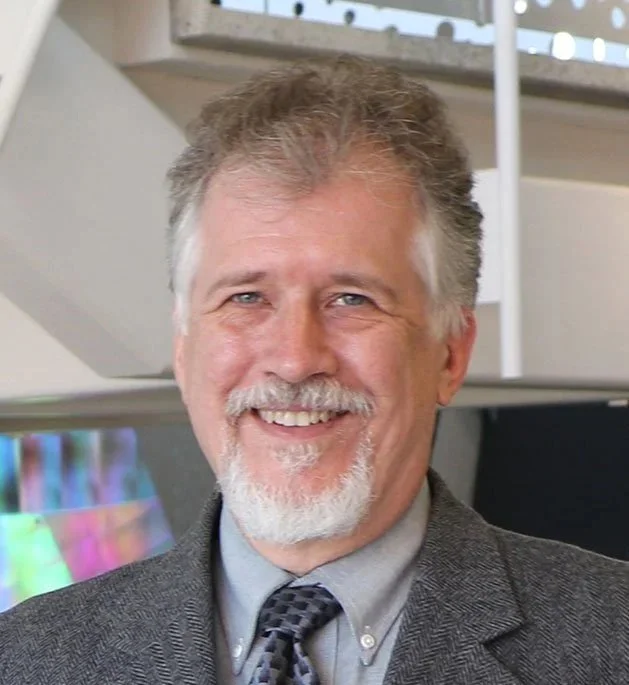
Dr. Alric Rothmayer
Senior Principal Engineer- Aerospace Analytics-
Dr. Rothmayer is the Senior Principal Engineer for Aerospace Analytics for BEST, LLC. He consults in the area of mathematical modeling of physical systems. He obtained his B.S., M.S. and Ph.D. from the University of Cincinnati as part of a NASA Center of Excellence in Computational Fluid Dynamics (CFD). Dr. Rothmayer was a Professor and the Vance & Arlene Coffman Department Chair of Aerospace Engineering at Iowa State University, a member of the CFD Center, and an affiliate professor of Mathematics. He was major professor for PhD students and a member of PhD committees in both Aerospace Engineering and Mathematics. Dr. Rothmayer won several awards, including a Presidential Young Investigator Award from President Reagan, a NASA Group Achievement Award and a NASA Turning Goals into Reality (TGIR) Award. Dr. Rothmayer has been a visiting researcher at the Ohio Aerospace Institute (at NASA Glenn Research Center), a visiting Research Fellow and Honorary Research Fellow in the Mathematics Department at University College London, as well as a visiting graduate student at NASA Ames Research Center and the Department of Mathematics at the Imperial College of Science and Technology (London).
Dr. Rothmayer has published over 100 refereed journal and conference papers that touch on various mathematical modeling topics ranging from viscous internal and external flows at subsonic through hypersonic speeds, boundary layer separation theory and computation, laminar and turbulent surface roughness, flows past compliant surfaces, flow control, numerical methods, dynamical systems and ensembles, magnetohydrodynamics, multi-phase flows of liquids, as well as phase transitions and aircraft icing. Dr. Rothmayer is an American Institute of Aeronautics and Astronautics (AIAA) Associate Fellow. In addition to serving two terms on the AIAA Fluid Dynamics Technical Committee, Dr. Rothmayer was general chair of the 3rd AIAA Theoretical Fluid Mechanics Conference. From 2004-2008, Dr. Rothmayer was a voting member of the SAE-AC-9C Aircraft Icing Technology Subcommittee of the Aircraft Environmental Systems Committee of the Aircraft Division of SAE and was an organizer and session chair of Icing Physics (ICE20) at the SAE 2007 Aircraft & Engine Icing International Conference in Seville, Spain. He was also a member of the organizing committee of the United States Strategic Command’s (STRACOM) Academic Alliance Conference in 2020.
Most recently Dr. Rothmayer was a consultant in the area of unstable flight dynamics and threat engineering, tasked with developing low order mathematical models of unstable flight dynamics. While at Iowa State University, Dr. Rothmayer taught undergraduate and graduate courses in fluid mechanics over all speed ranges (subsonic through hypersonic) as well as propulsion, electromagnetics and plasma physics, aircraft performance, computer programming, numerical analysis, and asymptotic analysis. He was co-author of Fundamentals of Fluid Mechanics 7th edition. Dr. Rothmayer interned at NASA Langley Research Center and has participated in research projects for NASA, the Air Force, the Navy and the United Technologies Corporation. His background includes a deep understanding of fundamental engineering principles with wide ranging formal academic studies in engineering, mathematics and physics at the undergraduate through graduate levels as well as ongoing personal studies of more advanced applied mathematics and physics topics.
-
Scientific research and analysis

Andrea Bonacci
Senior Engineer - Optimal Control of Dynamical Systems-
Andrea N. Bonacci is a Senior Engineer specializing in optimal control of dynamic systems at BEST, LLC. Her work focuses on the development of advanced control strategies, system optimization, and high-fidelity modeling and simulation for complex engineering systems. She applies control theory and optimization techniques to problems involving energy systems, aerospace dynamics, and physical system modeling.
Mrs. Bonacci holds a Master of Science in Aerospace Engineering and a Master of Science in Physics from Iowa State University, as well as a Bachelor of Science in Physics from West Virginia University. Her graduate research centered on optimal control strategies for ocean wave energy converters, including the development of objective functions designed to maximize power absorption while minimizing power variance. This work integrated hydrodynamic modeling, control derivation, and genetic-algorithm-based system optimization for wave energy systems.
In addition to her work in energy systems, Mrs. Bonacci has conducted research in experimental and computational physics, including detector simulation and instrumentation development for neutrino experiments at Fermilab. Her work included the design of reflective light-collection strategies for hybrid Cherenkov–scintillation detectors, photomultiplier testing, and development of optical simulation models.
-
Threat & target engineering
Scientific research & analysis
Optimal control optimization of systems
Advanced weapons design
Numeric modeling in MATLAB, Python
Boundary element methods in NEMOH, BEMIO
Hunter Dennison
Senior Engineer --
Hunter J. Dennison is a Graduate Research Assistant in the Mechanical, Materials & Aerospace Engineering Department at West Virginia University. He received an A.A. in Physics, Mathematics, and Aerospace Engineering from Potomac State College of WVU, a B.S. in Mechanical Engineering and Aerospace Engineering from West Virginia University, and is currently pursuing a Ph.D. in Aerospace Engineering at West Virginia University. He has expertise in the areas of fluid mechanics, unsteady aerodynamics, computational fluid dynamics, unstable flight, and threat engineering. He has conducted research in the areas of characterizing unstable tumbling missile flight dynamics, errors and uncertainties present in optical motion capture systems, and pediatric cardiovascular hemodynamics pre- and post-Fontan surgery. His research has utilized techniques and approaches such as CFD, CFD-coupled 6DOF, free-flight testing, and statistical analysis. He has published a number of conference proceedings related to his variety of research. In addition to his research efforts, Hunter J. Dennison has taught a couple of classes on the subject matter of CFD through the MMAE Department at West Virginia University.
-
AI/ML applications for aerospace and space science systems
Astrodynamics and orbit determination for atmospheric density modeling
Mission operations and spacecraft instrument coordination
Aerodynamics, CFD, aircraft performance, and icing analysis
Numerical modeling and scientific computing (Fortran, MATLAB, Python, TensorFlow, PyTorch)

Chris McCallister
Senior Engineer- Flight Testing and Mechanical Systems-
Chris McCallister is the Senior Engineer for Flight Testing & Mechanical Systems for BEST, LLC. He received his Bachelor of Science degree in Mechanical Engineering from West Virginia University in 2019 and his Master of Science degree in Aerospace Engineering from West Virginia University in 2022. His graduate research included the design, construction and operation of a dual chamber energetic launch system, as well as the study of the internal ballistics of such systems and their incorporation into experimental aerospace research.
Mr. McCallister has since worked as an Engineering Scientist at West Virginia University, participating in threat engineering research projects for the United States Navy. His work has included wind tunnel investigation of damaged-state aerodynamics and the development of the university's indoor infrared motion capture range for characterization of unstable flight vehicles. He has extensive experience with electro-optical data collection as well as the design of non-axisymmetric test projectiles, balancing unique mass property specifications with survivability requirements under high acceleration. Mr. McCallister is a member of the AIAA and holds a SECRET security clearance.
Prior to attending West Virginia University, Mr. McCallister served in the United States Marine Corps for twenty-three years in a variety of ground combat positions. This culminated in seven years of service as an Infantry Weapons Officer (Marine Gunner) where he advised commanders regarding training and employment of small-arms, mortars, rockets, and guided missiles. He is a qualified Inter-service Range Safety Officer with over 25 years of live-fire range development and safety experience as well as a distinguished graduate of the Expeditionary Warfare School and The Basic School.
-
Senior Engineers
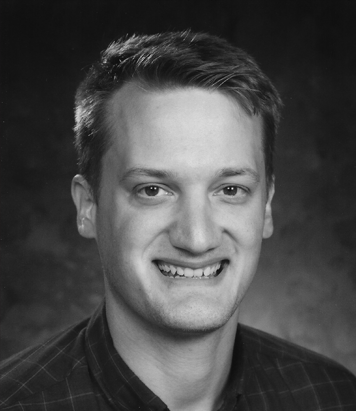
Eric Fattig
Senior Engineer - AI/ML of Aerospace Systems-
Eric Fattig is the Senior Engineer for AI/ML of Aerospace Systems at BEST, LLC. He received his M.S. in Aerospace Engineering from the University of Kansas (2011), and a B.S. in Engineering Physics (also from KU, 2009). He has a breadth of experience within aerospace engineering and space science. Eric Fattig is currently a Research Scientist at West Virginia University.
His graduate research focused on using optimal orbit determination to improve upper atmospheric density models for variable solar and geomagnetic activity conditions. He also has experience in aircraft consulting engineering, including component manufacturing, structural stress substantiation and fatigue and damage tolerance analysis for FAA certification, computational fluid dynamics, aircraft performance, and icing analysis for military aircraft modifications.
Additionally, he worked in the field of space science research as a Sr. Research Engineer while working on multiple NASA missions (Juno, New Horizons, and IMAP). He was a member of the Juno Science Operations Center for the primary mission and part of the extended mission, managing the coordination of Juno’s suite of scientific instruments and the corresponding power and data budgets. He was also the operations lead on space science instruments (Juno-JADE and New Horizons-SWAP) and worked on the early phases of activity planning for the CoDICE instrument on the IMAP spacecraft prior to launch. Most recently at WVU, he has been deploying ML and other numerical techniques towards other complex problems: atmospheric flight, astrodynamics, and upper atmospheric density modeling.
He has experience in research, complex scientific and flight operations, engineering analysis and FAA certification. He also has technical experience in numerical analysis and machine learning using Fortran, Matlab, IDL, Python, Tensorflow, and Pytorch.
-
AI/ML applications for aerospace and space science systems
Astrodynamics and orbit determination for atmospheric density modeling
Mission operations and spacecraft instrument coordination
Aerodynamics, CFD, aircraft performance, and icing analysis
Numerical modeling and scientific computing (Fortran, MATLAB, Python, TensorFlow, PyTorch)

Jacob Yancosek
Senior Engineer -